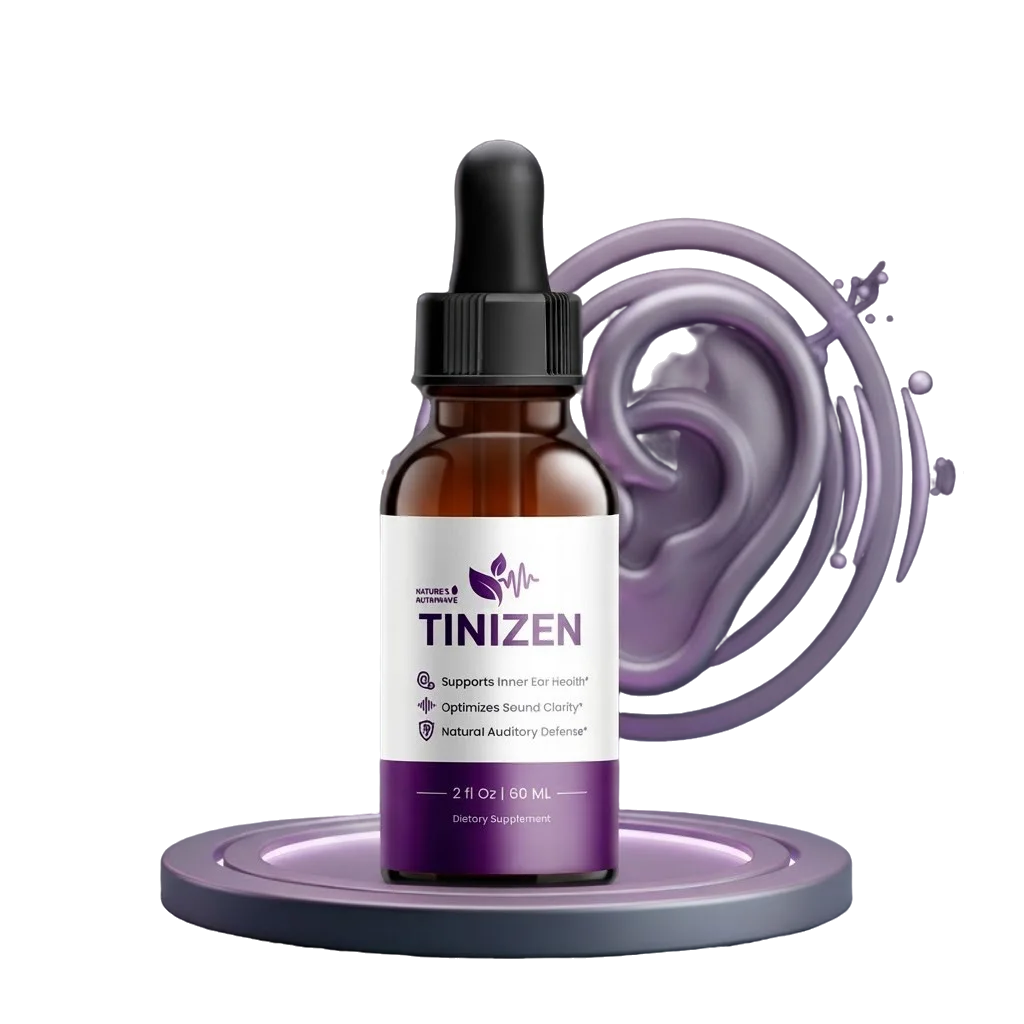
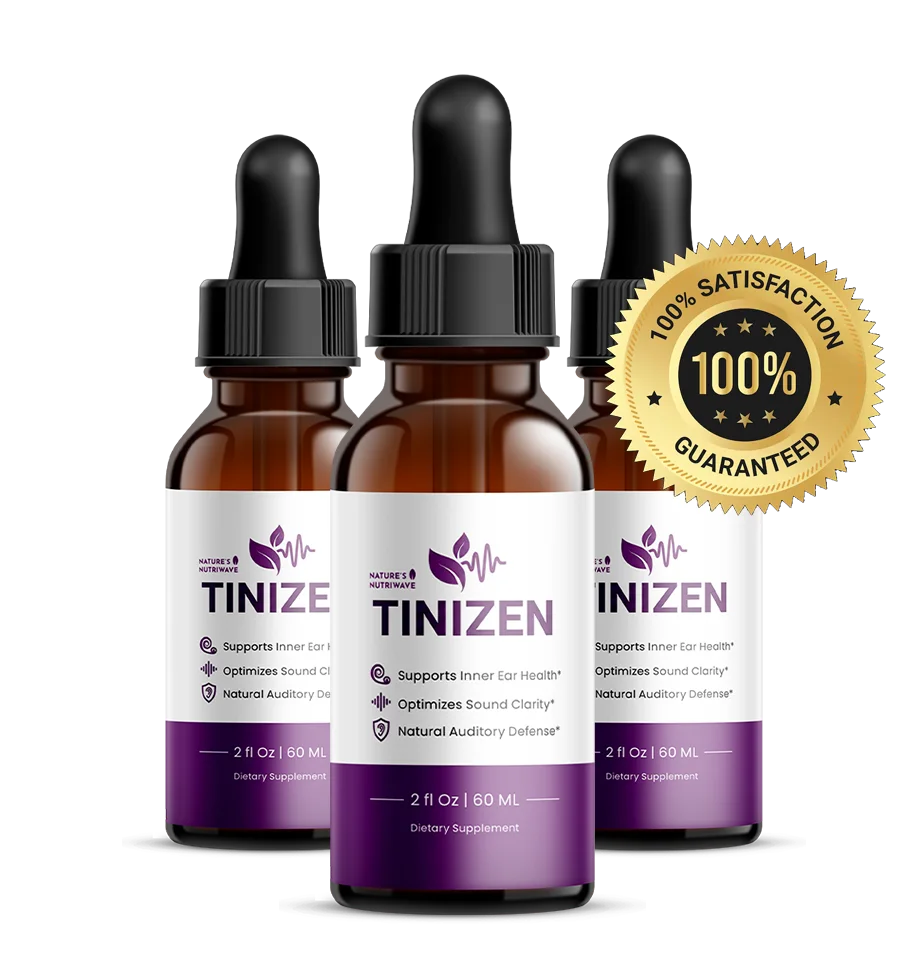
Tinizen™ is a liquid-drop dietary supplement that pairs antioxidant botanicals — grape seed, green tea and panax ginseng among them — with calming amino acids like GABA and a trace of chromium, in a 200 mg blend formulated to support auditory wellness and the everyday health of the inner ear as part of a balanced lifestyle.
Made in an FDA-registered facility · Non-GMO · 60-day money-back guarantee
100% Naturalplant-based blend
Made in the USAglobally sourced actives
GMO-Freenon-GMO formula
GMP Facilityquality-controlled
The complete fast answer for readers, voice assistants and AI — every essential detail in one place, each written as a full, quotable sentence.

Tinizen is a doctor-formulated liquid supplement produced in the United States in an FDA-registered facility that follows Good Manufacturing Practices (GMP). Every batch is made from non-GMO ingredients and finished with a naturally flavored, stevia-sweetened base — no artificial sweeteners, no dairy, no gluten.
“FDA-registered facility” refers to where Tinizen is manufactured. Dietary supplements are not approved by the FDA, and these statements have not been evaluated by the Food and Drug Administration.
Every badge below reflects how and where Tinizen is made and formulated — not a health outcome.


Figures describe the product and its guarantee. They are not claims about results, which vary from person to person.

Built by a formulation team and produced under GMP quality control.
Non-GMO botanicals and amino acids in a naturally flavored, stevia-sweetened base.
No wheat or gluten — friendly for most everyday diets.
Contains no dairy, so it fits a wide range of lifestyles.
A plant-forward formula suited to vegetarian routines.

Backed by a 60-day money-back guarantee — try it risk-free.
Age, loud environments, stress and everyday oxidative wear all pull in the same direction inside the ear: tired hair cells, a fuzzier signal, and for many people that familiar background ring or buzz. It is rarely one dramatic thing — it is the accumulation of ordinary days. For most people the goal is not a cure-all; it is simply steadier, calmer hearing comfort.
Auditory wellness is the product of many small factors: circulation to the inner ear, antioxidant defense against oxidative stress, and the quality of the signal that travels from ear to brain. Nutrition can play a supporting role. Certain amino acids and traditionally used botanicals have long been part of that conversation — GABA and L-tryptophan for everyday calm, and polyphenol-rich plants such as grape seed and green tea used for generations in wellness traditions around the world.
Tinizen was built around that idea: a focused daily dropper that brings those well-studied nutrients together, then gets out of the way of your routine.
What follows is a plain-language look at what Tinizen is, how its formula is intended to work, exactly what is inside each serving, and the research those ingredients draw on — transcribed directly from the product’s Supplement Facts panel, with no claims to diagnose, treat, cure or prevent any disease.

Tinizen is a once-daily liquid dietary supplement for everyday auditory and inner-ear wellness. Rather than a capsule or powder, it comes as fast, convenient drops: you shake the bottle, take one or two droppers full, and swallow — no mixing, no measuring cups, no routine to overthink.
Inside each 1 ml serving is the trace mineral chromium together with a 200 mg proprietary blend of botanicals and supporting amino acids — GABA, L-glutamine, L-tryptophan, grape seed, green tea leaf, panax ginseng, maca root, African mango seed and more — in a naturally flavored, stevia-sweetened base.

Tinizen is designed for adults who want a simple, consistent way to support hearing and auditory comfort as part of everyday life — conversations, quiet evenings, time outdoors and routine check-ups. It is a complement to a healthy lifestyle, not a replacement for medical care.
Not intended for children, or for those who are pregnant or nursing. If you have blood pressure, diabetes or a circulatory condition, or take medication, speak with your physician first.


Tinizen is designed to support the ear’s own everyday defenses — not to override them. Here is the thinking behind the formula.

The formula leans on nutrients with long histories of dietary use: polyphenol-rich plants, calming amino acids, and a trace mineral involved in normal metabolism. Delivered as a fast liquid, they are simple to take and simple to keep up with day after day.
Chromium picolinate is the single quantified mineral on the label; the botanical and amino actives — polyphenols, adaptogens and calming amino acids — are combined in a 200 mg proprietary blend.
Polyphenol-rich botanicals such as grape seed and green tea are traditionally valued for their antioxidant activity, discussed in the context of protecting the delicate hair cells of the inner ear from everyday oxidative stress.
Calming amino acids — GABA, L-glutamine and L-tryptophan — are part of normal nervous-system function, the everyday communication that carries sound from the ear toward the brain.
Adaptogens such as panax ginseng and eleuthero have long traditions of use for healthy circulation and everyday vitality — relevant to the well-supplied blood flow the auditory region relies on.
These statements describe the general and traditional roles of the ingredients and are not intended to diagnose, treat, cure or prevent any disease.
Transcribed directly from the Supplement Facts panel. Each ingredient below links to an independent, authoritative reference so you can read the science yourself.
Panax Ginsengadaptogenic root
Green Tea Leafpolyphenol source
Grape Seedantioxidant polyphenols
Amino AcidsGABA, glutamine & moreA naturally occurring amino acid and calming neurotransmitter. GABA is widely discussed in the context of everyday relaxation and a settled nervous system — the same system that carries the auditory signal from ear to brain.
One of the most abundant amino acids in the body, used across everyday metabolism and normal nervous-system function. It is a foundational building block the body draws on daily.
An essential amino acid and a precursor the body uses to make serotonin, and traditionally associated with relaxation and restful sleep — part of the everyday calm the formula aims to support.
The seed of the wine grape is one of the richest natural sources of polyphenol antioxidants (proanthocyanidins), widely studied for supporting healthy circulation and antioxidant defense. In healthy volunteers, a randomised placebo-controlled trial found grape seed extract modestly improved blood pressure and perceived stress (Schön et al., Nutrients, 2021); no comparable trial has tested it for hearing.
One of the most consumed beverages on earth and a rich natural source of polyphenol antioxidants, widely studied for general antioxidant and circulatory wellness. Green tea polyphenols have protected cochlear hair cells in laboratory models (Gu et al., Neurochemical Research, 2015) — a cell-level finding, not a human hearing result.
Asian ginseng is one of the most storied adaptogens in traditional wellness, valued for supporting healthy circulation, resilience and everyday energy. The only human trial to test ginseng specifically in people with chronic tinnitus was a small, open-label pilot study, which is suggestive rather than conclusive (Kim et al., Journal of Audiology & Otology, 2015).
An essential trace mineral that contributes to normal macronutrient metabolism. Chromium picolinate is a well-studied, readily absorbed form and is the single quantified nutrient on the panel.
The blend is rounded out with maca root, African mango seed, eleuthero, astragalus, gymnema leaf, coleus forskohlii, guarana, plus L-tyrosine, L-arginine, beta-alanine, L-ornithine and L-carnitine — botanicals and amino compounds the body uses across everyday vitality.
Reference: NIH Office of Dietary Supplements — fact sheets by ingredient →
Full 200 mg blend also includes grapefruit, capsicum, raspberry ketones and monoammonium glycyrrhizinate. See the complete Supplement Facts panel below.
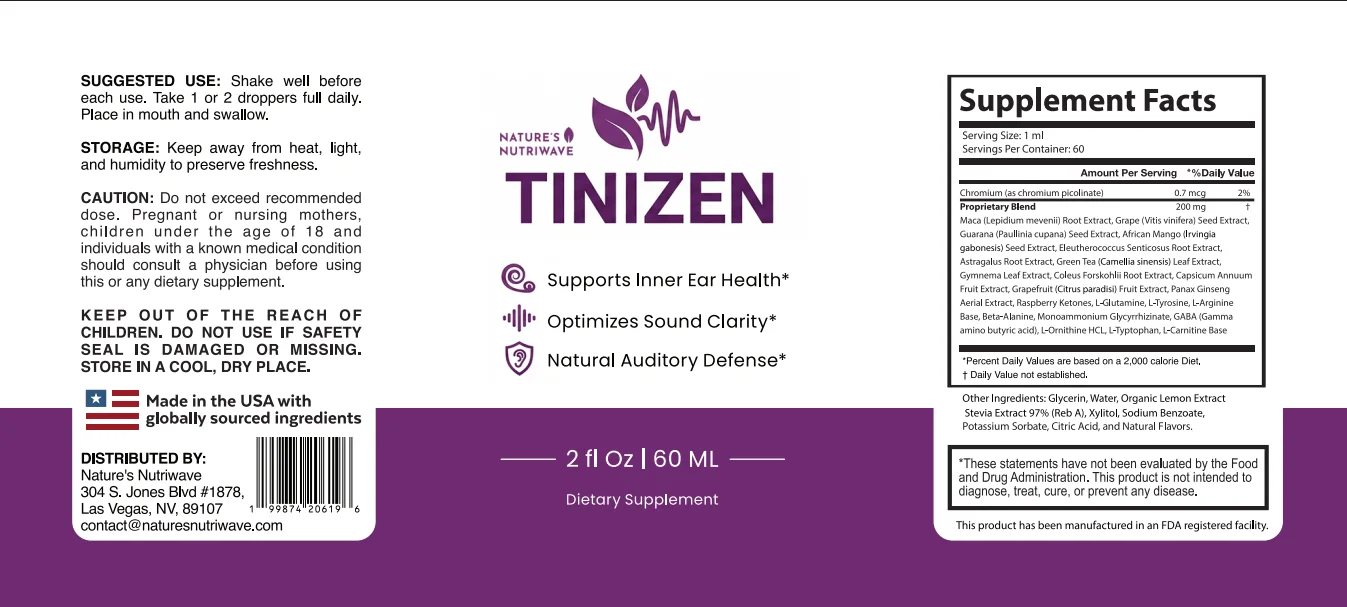
Serving size: 1 ml (one dropper) · 60 servings per container. Exactly what is in every serving — taken straight from the label.
| Amount per 1 ml serving | %DV |
|---|---|
| Chromium (as Chromium Picolinate) | 0.7 mcg · 2% |
| Proprietary Blend | 200 mg · † |
Proprietary blend: Maca Root, Grape Seed, Guarana Seed, African Mango Seed, Eleuthero Root, Astragalus Root, Green Tea Leaf, Gymnema Leaf, Coleus Forskohlii Root, Capsicum Fruit, Grapefruit Fruit, Panax Ginseng, Raspberry Ketones, L-Glutamine, L-Tyrosine, L-Arginine, Beta-Alanine, Monoammonium Glycyrrhizinate, GABA, L-Ornithine HCL, L-Tryptophan, L-Carnitine.
Other ingredients: Glycerin, Water, Organic Lemon Extract, Stevia Extract 97% (Reb A), Xylitol, Sodium Benzoate, Potassium Sorbate, Citric Acid and Natural Flavors. † Daily Value not established.
Suggested use: Shake well before each use. Take one or two droppers full daily; place in mouth and swallow.
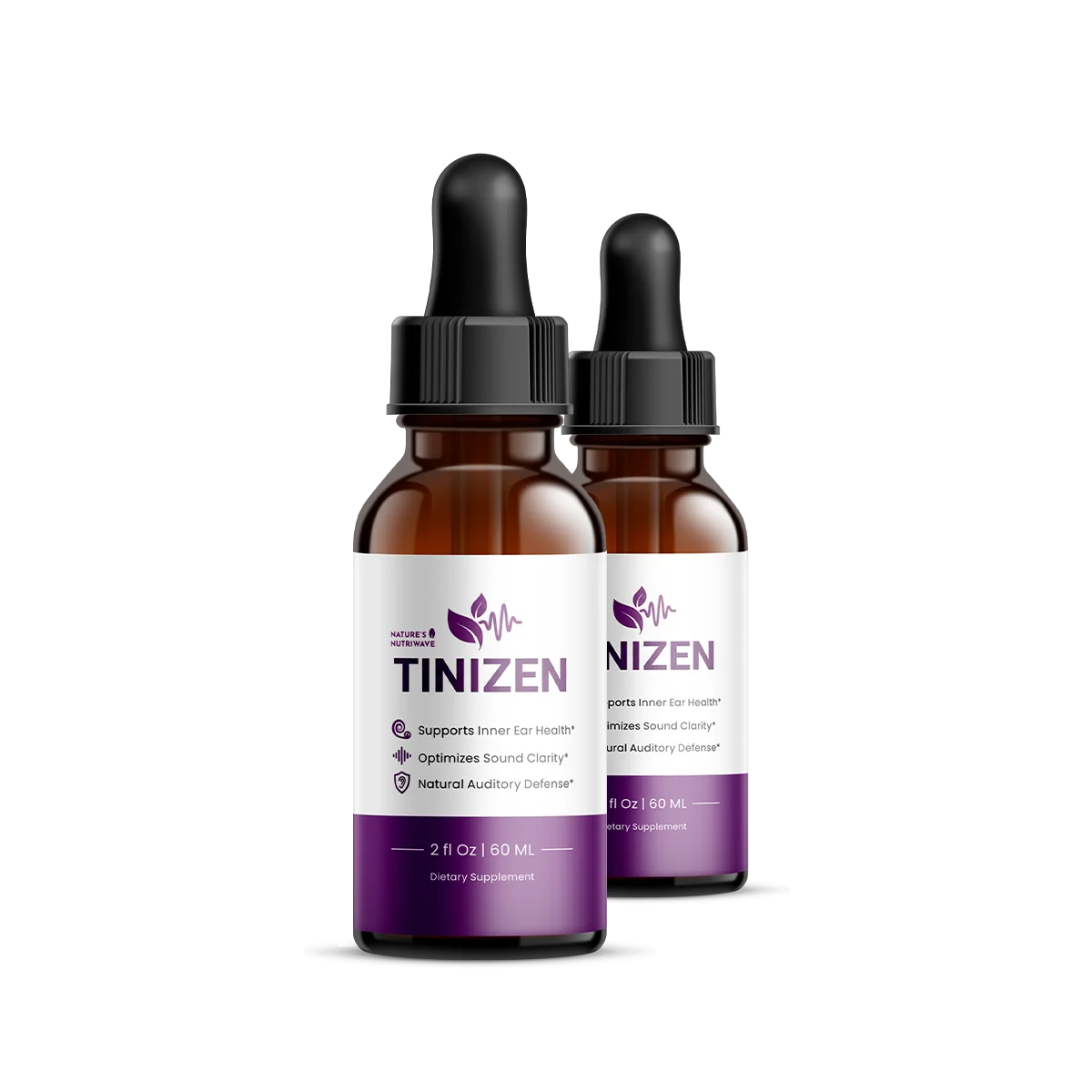
Tinizen is sold in one form only: a liquid you take with a dropper. There is no Tinizen capsule, tablet, softgel, gummy, powder or chewable, and the label on the bottle is the proof — it reads “2 fl Oz | 60 ML, Dietary Supplement,” with a serving size of 1 ml.
This distinction matters more than it sounds, because people shopping for a hearing supplement usually arrive with a form already in mind. If you were hoping for a gummy, Tinizen is not it. If you dislike swallowing capsules, that is the practical reason many buyers give for choosing drops in the first place. The bottle holds 60 one-millilitre servings, which is where the “one-month supply” on every package comes from, and each serving carries 0.7 mcg of chromium plus the 200 mg proprietary blend.
The base is glycerin and water, sweetened with stevia leaf extract and xylitol and flavoured with organic lemon extract, so it tastes mildly lemony rather than herbal-bitter. Sodium benzoate, potassium sorbate and citric acid act as preservatives, which is why the label asks you to keep the bottle away from heat, light and humidity. None of that is exotic — it is a conventional liquid-supplement base, and it is printed in full on the panel.
| Form | Does Tinizen come this way? | What that means in practice |
|---|---|---|
| Liquid drops | Yes — the only form | Shake, draw one or two droppers full, swallow. No water needed. |
| Capsules or tablets | No | Any listing selling “Tinizen capsules” is not selling this product. |
| Gummies | No | Same caution — there is no gummy version at any price. |
| Powder or drink mix | No | The blend is already dissolved in a glycerin-and-water base. |
One practical consequence of the liquid format: because the actives are already in solution there is nothing to disintegrate, but a liquid is also more sensitive to heat and light than a capsule. Store the bottle in a cool, dry place, keep the cap closed, and do not use it if the safety seal is damaged or missing — all three instructions come straight from the label.

Statements describe the general and traditional roles of the ingredients and have not been evaluated by the Food and Drug Administration.

One simple dropper is the whole routine. There is nothing to mix and nothing to measure — just shake, dose and swallow, once a day.
Shake the bottle well, then draw one or two droppers full — a 1 ml serving delivers chromium plus the full 200 mg botanical-and-amino blend.
Place the liquid in your mouth and swallow. Tinizen is best taken in the morning before meals.
Use it once a day alongside a healthy routine so the botanicals can build their support over time.
Do not exceed the recommended dose. Keep out of the reach of children.
Order the 3- or 6-bottle package and get these companion e-guides free — delivered as instant digital downloads to help you get the most from a steadier daily routine.
Bonus 1 · $67 valueA plain-language look at reading labels and asking better questions about what you put in your body.
Bonus 2 · $59 valueEveryday habits and brain-friendly foods to help keep memory and focus sharp.
Bonus 3 · $47 valueA friendly reference to time-honored botanicals and the traditions behind them.
Bonus 4 · $77 valueA simple day-by-day plan of listening habits and self-care for your ears.
Bonus 5 · $39 valueGet the most from Tinizen with a short guide to fitting the drops into your day.
Bonuses are digital downloads. Availability may vary by package and while supplies last; see the official store for current offers.
Every order is a one-time payment — no subscription — protected by our 60-day money-back guarantee. The more you bundle, the more you save.

One-time payment · 60-day guarantee
One-time payment · 60-day guarantee · free bonuses
🔒 Secure encrypted checkout · one-time payment · no subscription
Try Tinizen for a full two months. If you’re not completely delighted, return all bottles within 60 days of purchase for a refund of your purchase price — no questions, no hassle. That’s how confident we are that you’ll want to make it part of your routine.
Tinizen costs $79 for one bottle, $69 per bottle on the three-bottle package and $49 per bottle on the six-bottle package. Because a bottle holds 60 one-millilitre servings and the label suggests one or two droppers a day, the per-day figure depends on which of those two servings you take.
The arithmetic is worth doing before you choose a package, because the “month’s supply” language assumes the two-dropper serving. At one dropper a day a bottle stretches to roughly two months; at two droppers a day it is the month the packaging describes. Both sit inside the label’s suggested use, so the honest answer to “what does it cost per day” is a range, not a single number.
| Package | Price per bottle | Shipping | Per day at 2 droppers | Per day at 1 dropper |
|---|---|---|---|---|
| 1 bottle | $79 | Small shipping fee | about $2.63 | about $1.32 |
| 3 bottles | $69 | Free U.S. shipping | about $2.30 | about $1.15 |
| 6 bottles | $49 | Free U.S. shipping | about $1.63 | about $0.82 |
The six-bottle package is the cheapest per bottle by a wide margin — $49 against $79, a saving of $30 a bottle — but it is also the largest sum committed at once, and it is the package the seller most wants you to choose. Whether that is right for you comes down to one honest question: are you willing to take a botanical blend every day for months? If the answer is “I would rather see how it goes first,” the single bottle costs more per day but risks far less. The 60-day money-back guarantee applies either way, and the three- and six-bottle packages also carry the digital guides listed above.
Prices are the ones displayed on the official store when this page was last reviewed on 3 September 2026. Promotional pricing changes without notice, and the price shown at checkout is the one that applies.
Tinizen is sold through its official online store only. It is not stocked by pharmacies, supermarkets or health-food chains, and there is no retail shelf where you can pick a bottle up in person.
Direct-to-consumer is how most formulas of this kind are distributed, and it has two practical consequences for a buyer. The first is that the 60-day money-back guarantee is administered by the seller, so it covers orders placed through the official checkout — a bottle bought from a marketplace reseller sits outside it. The second is that the seller controls the chain from bottling to doorstep, which is the usual argument for buying direct rather than through a third party.
If you find Tinizen listed on a general marketplace at an unusual price, treat it with caution. With a liquid supplement you cannot verify how a reseller stored the bottle or how close it is to expiry, and any refund runs through that marketplace rather than the guarantee described on this page. The distributor named on the label is Nature’s Nutriwave, 304 S. Jones Blvd #1878, Las Vegas, NV 89107, and the label prints [email protected] for product enquiries.
| Question | Answer |
|---|---|
| Sold in stores? | No — online only, through the official store |
| Available on prescription? | No — it is a dietary supplement, not a medicine |
| Subscription or auto-billing? | No — every order is a single one-time payment |
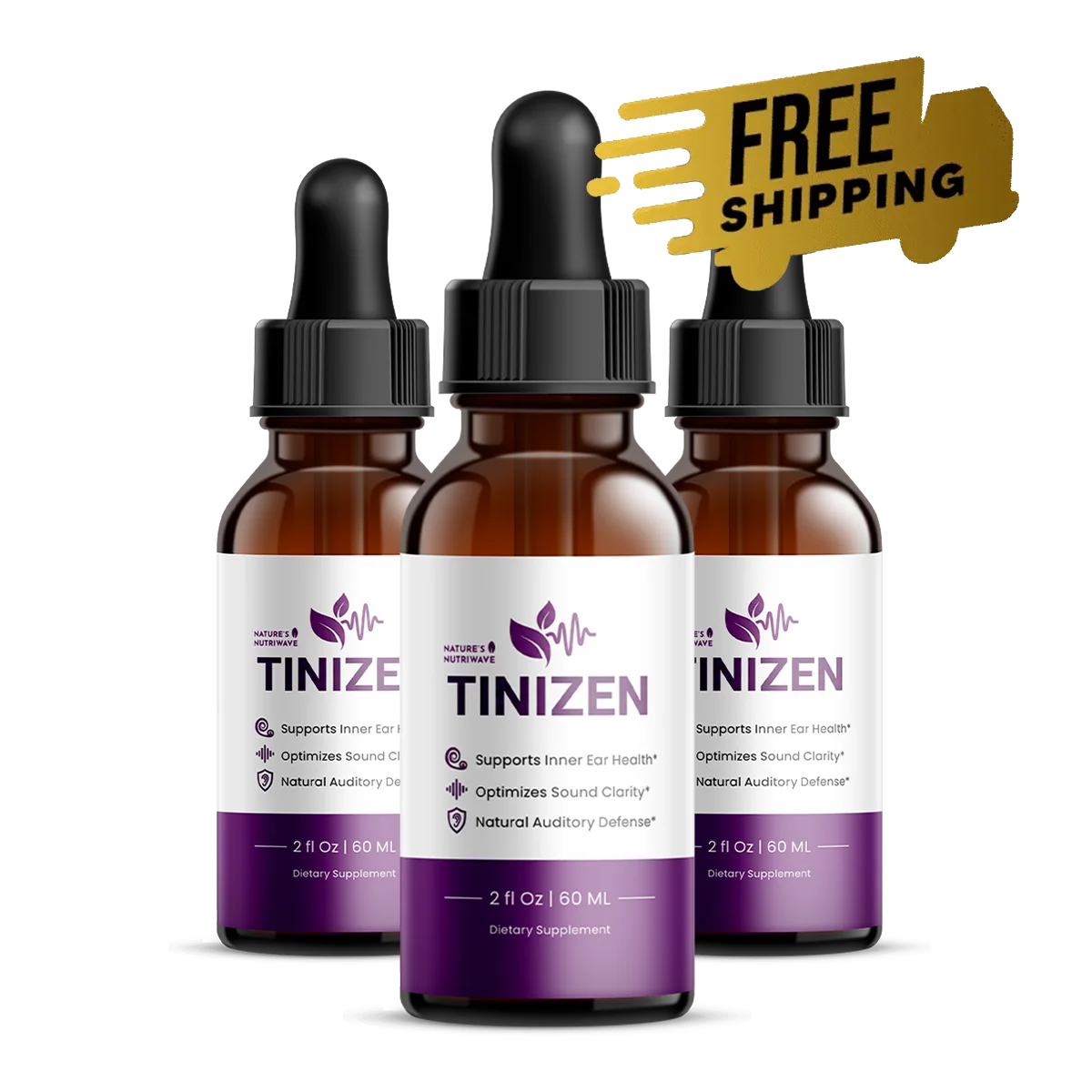
| Free shipping? | Stated for U.S. orders on the 3- and 6-bottle packages; a single bottle carries a small fee |
| Refund window | 60 days from purchase, returning all bottles |
Go to the official Tinizen store →
This page is an independent guide. We are not the manufacturer or the seller, and we may earn a commission if you buy through the link above — at no extra cost to you. See how we earn.


The dropper is genuinely simple — a quick shake and I’m done. Two weeks in, the buzzing had eased, my focus improved and I finally slept soundly.
Day by day the ringing in my ears became more manageable. It honestly feels like I got my peace and quiet back — and the lemon flavor is pleasant.
My ears feel refreshed and I no longer strain to hear conversations. I ordered the six-bottle pack so I wouldn’t run out, and the guarantee made it easy.
Read the testimonials above closely and a pattern appears: every one of them is a personal account of how someone felt, not a measurement. “The buzzing had eased,” “my ears feel refreshed,” “the lemon flavor is pleasant” — these are impressions, and impressions are exactly what a customer testimonial is designed to capture. None of them involved an audiogram, a tinnitus severity questionnaire or a control group, so none of them can tell you what Tinizen does compared with doing nothing.
That is not a knock on the people who wrote them. It is a limit of the format. Tinnitus and everyday listening comfort both fluctuate on their own, and they are unusually responsive to expectation, sleep and stress — which is precisely why the tinnitus literature is full of trials where the placebo arm improves too. A published network meta-analysis of randomised trials in tinnitus found no oral agent with convincing evidence of benefit over placebo (Chen et al., EClinicalMedicine, 2021). Individual glowing accounts and a thin evidence base can, and here do, coexist.
The complaints you are most likely to encounter for a product in this category are equally predictable, and worth knowing before you order: that it did nothing within the first fortnight, that the taste or the dropper is fiddly, or that the buyer did not realise a proprietary blend hides the individual amounts. Two of those three are answerable in advance. Botanicals are slow, so a two-week verdict is premature; and the blend genuinely is proprietary, so nobody outside the manufacturer knows how much grape seed or GABA is in a serving. If either of those would frustrate you, that is useful to know now rather than after you have bought six bottles.
Testimonials reflect individual experiences. Results vary and are not guaranteed. Tinizen is a dietary supplement, not a treatment for any medical condition.
There is no established timeframe for Tinizen, because no clinical trial has been run on the finished formula. What the seller says, and what botanical supplements generally ask for, is consistent daily use across several weeks to a few months before you judge it.
It is worth being precise about why nobody can give you a date. A proprietary blend of twenty-plus botanicals and amino acids has not been tested as a unit, and the individual ingredients that have been tested were studied at doses nobody outside the manufacturer can match to this label. So any “results in 14 days” promise for a product like this one is invented, not measured. The one number on the panel that is quantified — 0.7 mcg of chromium, two per cent of the Daily Value — is a trace amount by design.
What you can reason about is the shape of the routine. The habits that genuinely move hearing comfort work on different clocks: turning your headphones down helps the same afternoon, better sleep shows up within days to a couple of weeks, and dietary and circulatory changes accrue over months. A daily supplement sits at the slow end of that range, which is the practical reason the seller packages three- and six-bottle supplies. Set the expectation at “a season, not a week,” and reassess honestly at the end of it.
| Point in the routine | A realistic expectation |
|---|---|
| Days 1–7 | You learn the habit — shake, dropper, swallow. Judge the taste and whether the routine fits your morning, not the effect. |
| Weeks 2–4 | The first fair window for noticing anything at all. Many people notice nothing here, and that is unremarkable. |
| Months 2–3 | The seller’s own framing for botanical support, and roughly where the 60-day guarantee expires — so decide before it does. |
| Beyond 3 months | If nothing has changed by now, continuing is a spending decision rather than a wellness one. |
Individual results vary, and none of the above is a claim that Tinizen produces a particular outcome in a particular time. If your hearing changes suddenly, in one ear, or comes with dizziness or pain, that is a reason to see a doctor rather than to wait out a supplement.
Tinizen’s label carries no list of side effects, which is normal for a dietary supplement and is not evidence that none occur. The label does carry four specific cautions, and they are the honest starting point for anyone deciding whether to take it.
Printed on the bottle: do not exceed the recommended dose; pregnant or nursing mothers, children under the age of 18, and individuals with a known medical condition should consult a physician before using this or any dietary supplement; keep out of the reach of children; and do not use if the safety seal is damaged or missing. Those are the manufacturer’s own words, and they are the most reliable safety information available for this product.
Beyond the label, the sensible caution comes from the ingredient classes rather than from the finished blend. Guarana contributes caffeine, so people sensitive to stimulants may prefer a morning dose to an evening one. Ginseng, eleuthero and astragalus are adaptogens with documented potential to interact with medicines, including blood thinners and diabetes medication. Gymnema and chromium are both discussed in the context of blood sugar, which matters if you already take something that lowers it. Monoammonium glycyrrhizinate is a liquorice derivative, and liquorice compounds are the classic supplement caution for anyone with high blood pressure. Grapefruit appears in the blend too, and grapefruit is well known to affect how the body handles a number of prescription drugs.
| Who | What to do |
|---|---|
| Pregnant or nursing | The label says consult a physician first |
| Under 18 | The label says consult a physician first — this is an adult product |
| Taking any prescription medicine | Show the full ingredient list to your pharmacist before starting, especially with blood thinners, blood-pressure or diabetes medication |
| High blood pressure | Raise the liquorice-derived and caffeine-contributing ingredients with your doctor |
| Diabetes or blood-sugar management | Chromium and gymnema both belong in that conversation |
| Sensitive to caffeine | Guarana is a caffeine source; take it in the morning, not at night |
| Any known medical condition | The label’s own instruction: consult a physician first |
One more limitation deserves stating plainly, because it affects every safety judgement above: the 200 mg blend is proprietary, so the individual amount of each of its twenty-two components is not disclosed. That means neither you nor your pharmacist can check any single ingredient against a published safe intake. It is a legal and common way to label a supplement, and it is also a genuine information gap. If you take medicines that need careful management, that gap is the strongest reason to have the conversation before you order rather than after.
The evidence behind Tinizen is ingredient-level and general, not product-level and specific. No published trial has tested this formula, and the research that exists on its individual components is a mixture of laboratory work, small pilot studies and results from unrelated outcomes.
That oxidative stress is genuinely involved in inner-ear damage is not controversial; it is a mainstream account of how loud noise injures cochlear hair cells (Henderson et al., Ear and Hearing, 2006). So is the link between cardiovascular health and hearing: circulation to the cochlea is a plausible and reviewed pathway (Hull and Kerschen, American Journal of Audiology, 2010). Those two facts are why an antioxidant-and-circulation formula is a coherent idea rather than a random one.
Green tea polyphenols have protected cochlear hair cells in cell-culture models (Gu et al., Neurochemical Research, 2015), which is a long way from a person’s hearing. Grape seed extract improved blood pressure and perceived stress modestly in healthy volunteers (Schön et al., Nutrients, 2021) — a real human result, but not a hearing outcome. Korean red ginseng was tested in chronic tinnitus in a small, open-label pilot with no blinded control (Kim et al., Journal of Audiology & Otology, 2015). Oral GABA has a systematic review behind it for stress and sleep, and its own authors describe the human evidence as limited and the studies as small (Hepsomali et al., Frontiers in Neuroscience, 2020). Tryptophan has the strongest supporting literature of any amino acid here, and it is for sleep quality, not hearing (Sutanto et al., Nutrition Reviews, 2022).
It does not support the idea that Tinizen, or any oral supplement, treats tinnitus or restores hearing. The American Academy of Otolaryngology–Head and Neck Surgery’s clinical practice guideline on tinnitus recommends against relying on dietary supplements for it (Tunkel et al., Otolaryngology–Head and Neck Surgery, 2014), and a later network meta-analysis of randomised trials found no oral agent with convincing benefit over placebo (Chen et al., EClinicalMedicine, 2021). Even in the better-funded field of preventing noise-induced hearing loss, promising antioxidant candidates have repeatedly failed to reproduce their early results in human trials (Le Prell, Antioxidants & Redox Signaling, 2022).
Tinizen is a dietary supplement sold to support everyday auditory wellness alongside a healthy lifestyle. That is a legitimate thing for a supplement to be. It is not a treatment, it has not been shown to change hearing thresholds or tinnitus severity, and anyone telling you otherwise is going beyond the evidence. If you buy it, buy it as a daily habit you are willing to test for a couple of months with the guarantee as your backstop — not as a substitute for hearing protection, an audiologist’s appointment or the medical care that a sudden change in hearing warrants.
Tinizen is a real, physically manufactured dietary supplement with a printed Supplement Facts panel, a named U.S. distributor and a stated 60-day refund policy. Calling it a scam in the sense of “you pay and nothing arrives” is not supported by anything we can see. Whether it is worth $49 to $79 a bottle is a separate and fairer question.
Here is what checks out. The label names a distributor and a U.S. address — Nature’s Nutriwave, 304 S. Jones Blvd #1878, Las Vegas, NV 89107 — along with a contact email, a barcode and a batch-level safety seal instruction. It carries the standard FDA disclaimer in full. The ingredient panel lists every component of the blend by name, including the botanical species, and the “other ingredients” line accounts for the base. Manufacture is stated to be in an FDA-registered facility in the USA with globally sourced ingredients. That is more disclosure than a genuinely fraudulent listing bothers with.
Here is what should temper your enthusiasm. The 200 mg blend is proprietary, so you cannot check a single ingredient dose against any published research — and 200 mg spread across twenty-two components is a small total by the standards of the studies on those same ingredients. The marketing language around this category leans on words like “sound clarity” and “auditory defense” that sound clinical without committing to a measurable outcome. There is no published trial of the finished product. And “FDA-registered facility” means the facility told the FDA it exists; it is not FDA approval of the product, and no supplement has that.
| Claim you will see | Our read |
|---|---|
| Real product, really shipped | Supported — named distributor, full label, standard disclaimers |
| Made in an FDA-registered, GMP facility in the USA | As stated on the label — but registration is not approval |
| 60-day money-back guarantee | Stated by the seller; it applies to official-store orders and you return all bottles |
| One-time payment, no subscription | Stated by the seller — still worth reading your checkout page before confirming |
| “Supports inner ear health” | A structure-function marketing claim, not a demonstrated clinical effect |
| Doses you can verify | Not available — the blend is proprietary |
| Proven to reduce tinnitus or restore hearing | Not supported by the evidence, and not claimed on the label |
The practical way to protect yourself is not to hunt for a verdict but to reduce your exposure: buy through the official checkout so the guarantee applies, keep your order confirmation, note the date the 60-day window closes, and decide before it does. If a page anywhere promises that Tinizen cures tinnitus, reverses hearing loss or replaces a hearing aid, that page is the problem — the product’s own label makes no such claim, and neither do we.
Tinizen makes no medical claims. Every source below is a single, identifiable work — a named government fact sheet, a clinical practice guideline or a specific peer-reviewed paper — describing an ingredient or a general mechanism, not this finished product. Several of them are included precisely because they show the limits of the evidence.
These references describe the ingredients in general terms and do not constitute evidence that Tinizen treats, cures or prevents any condition. Always speak with a qualified healthcare professional about your individual needs.
Tinizen takes an antioxidant, botanical approach. It combines amino acids such as GABA, L-glutamine and L-tryptophan with polyphenol-rich botanicals including grape seed, green tea and panax ginseng, plus the trace mineral chromium, delivered as fast-absorbing liquid drops. It is formulated to support auditory wellness and the everyday health of the inner ear as part of a balanced lifestyle.
Each 1 ml serving supplies 0.7 mcg of chromium (as chromium picolinate) plus a 200 mg proprietary blend of maca root, grape seed, guarana, African mango, eleuthero, astragalus, green tea, gymnema leaf, coleus forskohlii, capsicum, grapefruit, panax ginseng, raspberry ketones and the amino acids GABA, L-glutamine, L-tryptophan, L-tyrosine, L-arginine, beta-alanine, L-ornithine and L-carnitine. There are 60 servings per bottle.
Tinizen is a liquid only. The bottle holds 2 fl oz (60 ml) and 60 one-millilitre servings, taken with the dropper in the cap. There is no Tinizen capsule, tablet, softgel, gummy, powder or chewable, so any listing offering one is not selling this product.
Shake well before each use. Take one or two droppers full daily, place the liquid in your mouth and swallow. It is best taken in the morning before meals, at whatever time of day you’ll remember.
There is no established timeframe, because no clinical trial has been run on the finished formula. Botanical blends are generally taken daily for several weeks to a few months before being judged, and individual results vary. A fair plan is to reassess honestly before the 60-day guarantee window closes.
Tinizen is $79 for a single bottle, $69 per bottle on the three-bottle package and $49 per bottle on the six-bottle package. At the two-dropper serving that works out at roughly $2.63, $2.30 and $1.63 a day; at one dropper a day, about half of each. Promotional pricing can change without notice.
Tinizen is sold through its official online store only. It is not stocked in pharmacies, supermarkets or health-food shops, and buying from a third-party marketplace reseller falls outside the seller’s 60-day money-back guarantee.
Because botanicals build their support gradually, most people choose the 3- or 6-bottle package so they don’t run out mid-routine. The 6-bottle option is the best value and ships free within the U.S. If you would rather test it first, a single bottle costs more per day but commits far less.
Yes. Every Tinizen order is a one-time purchase with no subscription, no auto-billing and no hidden charges of any kind.
Every order is protected by a 60-day money-back guarantee. If you’re not completely happy for any reason, return all bottles within 60 days of purchase for a full refund of your purchase price. The guarantee is administered by the seller and applies to orders placed through the official store.
The label lists no side effects, which is normal for a dietary supplement and is not proof that none occur. It does carry four cautions: do not exceed the recommended dose; pregnant or nursing mothers, anyone under 18 and anyone with a known medical condition should consult a physician first; keep out of reach of children; and do not use if the safety seal is damaged. Guarana contributes caffeine, and several of the adaptogens and the liquorice-derived ingredient can interact with medicines.
Tinizen is made in the U.S. in an FDA-registered facility from non-GMO ingredients. It is not intended for children or anyone under 18, or for anyone who is pregnant or nursing. If you have blood pressure, diabetes or a circulatory condition, or take medication, consult your physician before use. Because the 200 mg blend is proprietary, individual ingredient amounts are not disclosed, so show the full ingredient list to your pharmacist.
Tinizen is a real, physically manufactured supplement with a full Supplement Facts panel, a named U.S. distributor and a stated refund policy, so it is not a scam in the sense of a product that never arrives. The fair criticisms are different: the blend is proprietary so no dose can be verified, and no trial has tested the finished formula.
The published testimonials describe personal impressions — easier daily routine, ringing feeling more manageable, a pleasant lemon taste. They are not measurements: none involved an audiogram, a severity questionnaire or a control group, so they cannot show what the product does compared with doing nothing.
No. Tinizen is a dietary supplement, not a treatment, and it does not diagnose, treat, cure or prevent any disease. The professional clinical practice guideline on tinnitus does not recommend relying on dietary supplements for it, and a network meta-analysis of randomised trials found no oral agent with convincing benefit over placebo.
Join the people who’ve made Tinizen their once-a-day habit for everyday auditory wellness. One simple dropper, protected by a 60-day money-back guarantee — and the six-bottle bundle is the best value, with free U.S. shipping.
Order Tinizen Now